
China is a hi-tech country in which, in all business sectors including road transport, long-term trends go hand in hand with rapid and sudden changes, dictated by the opportunities of the moment and the prospects opened up by future scenarios. This is what Allestimenti & Trasporti witnessed when visiting the 2023 edition of the Asian giant's most important industrial vehicle show - the China Commercial Vehicle Show in Wuhan - and interviewing Dr. Holger Scherr, President and CEO, and Head of the Mercedes-Benz Business Unit at the joint venture between Daimler Truck and Foton in China- BFDA, Beijing Foton Daimler. Long-term trends, with a time horizon to 2030 and beyond, include the increasing focus of local transport companies on premium products, electrification, autonomous driving solutions and advanced connectivity-related services. The business generated by services, in particular, is set for robust growth in the coming years. Indeed, forecasts speak of a $44bn turnover in 2025 (compared to $32bn in 2021) and $69bn by the end of the decade. In the background of these changes is the ongoing consolidation in the road transport sector. Which should lead, according to a McKinsey study published last year, to a shift in demand for trucks from single-vehicle operators or less structured companies, towards medium-sized (with a fleet of more than 20 trucks) or large fleets. The latter could take almost 50% of truck purchasing volumes by 2030, compared to 30% in 2020 and 10% in 2010. In this changing environment, some European truck manufacturers - for example, Mercedes-Benz and Scania - have decided to locate the production of their latest generation models in China. This is in order to be able to take advantage, quickly and effectively, of the needs and opportunities offered by the most important truck market in the world in terms of sales volumes.
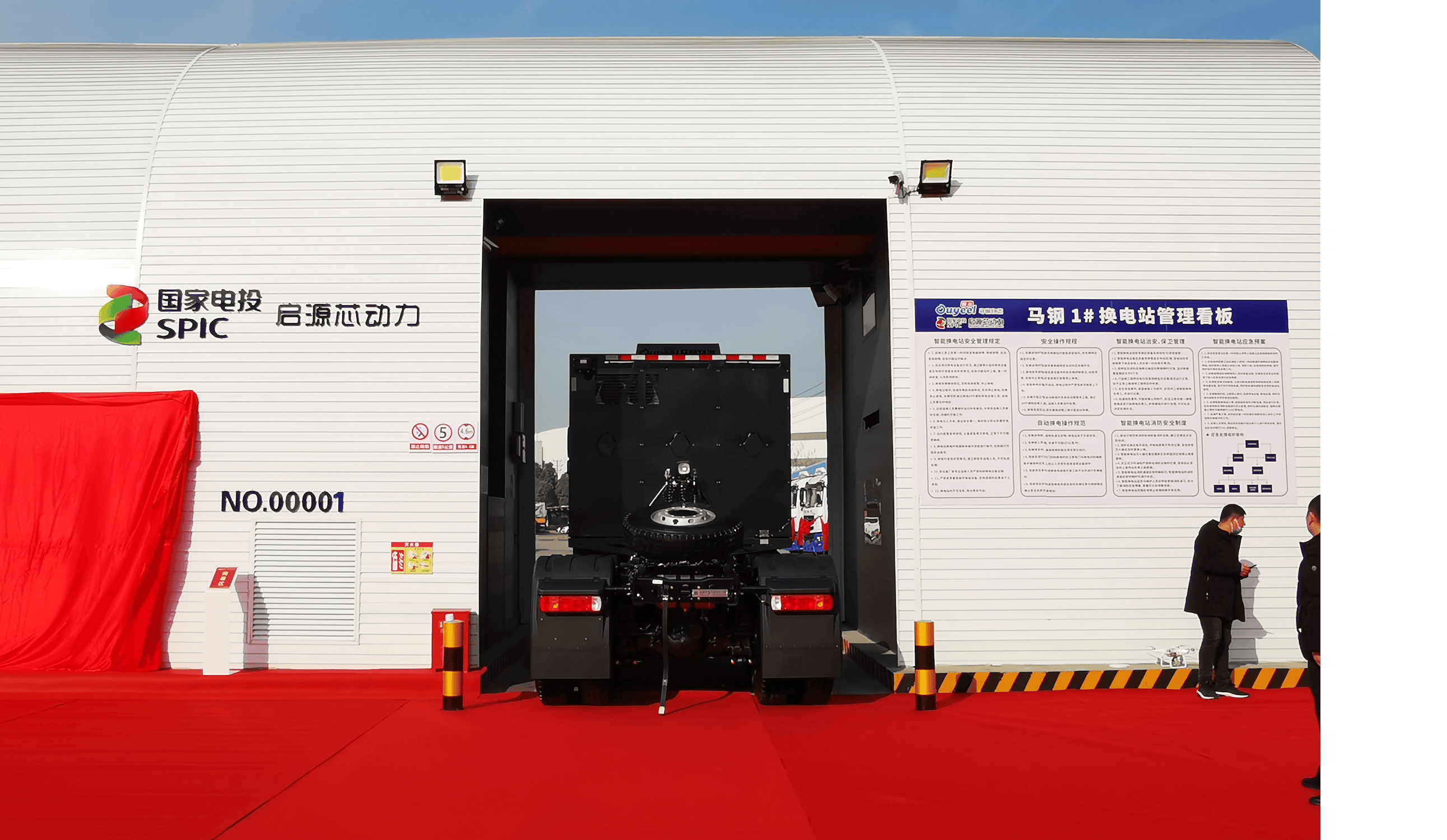
In fact, it was a market of around 1 million vehicles over 14 tonnes gross vehicle weight (GVW) in 2023, of which 800 thousand were over 18 tonnes GVW. These figures are a far cry from the stratospheric peaks reached a few years ago (1.6 million heavy vehicles in 2020 and 1.4 million in 2021), but still record-breaking when compared to the EU registration of some 267 thousand trucks (317 thousand including the UK and EFTA countries) of 16 tonnes GVW and over in 2023. Emerging trends, highlighted by numerous trucks on display at the Wuhan Show, concern unconventional powertrains, which go hand in hand with the latest generation China VI diesel engines, an emission regulation similar (but not equal) to the European Euro VI directive. Alternative trucks with LNG (liquefied natural gas) engines and battery-electric vehicles (BEV), equipped with a battery swap system, played a starring role at the show. Alongside them were a number of fuel cell heavy duty vehicles (FCEVs), for which China aims to develop an extensive infrastructure network for the distribution of hydrogen as the energy carrier of the future. The success of LNG for automotive use, which became tangible from April 2023, is quickly explained. The average price of diesel in China last year was around €998/mt, compared to €787/mt for LNG, a difference of around 27%. Bearing in mind that in the Asian country lorries travel up to 300,000 km per year with two drivers on board, the delta price between the two fuels really makes a difference to the total cost of ownership (TCO). Hence the offer by many local manufacturers of models equipped with one or two stacked large-capacity LNG tanks placed behind the cab on 6x4 tractors, suitable for combinations of 49 tonnes total weight GCW (the most popular one in the Chinese market). The success of LNG has created supply problems - in some cases, a real bottleneck - for cryogenic tanks, which are the critical component of gas engine drivelines. A similar technical solution – with a battery pack behind the cab - has been developed for electrically powered trucks (BEVs), thanks to the wide space available between the tractor’s cab and the front bulkhead of the semi-trailer. When the batteries tend to run out, the battery swap procedure, i.e. the quick replacement of the entire battery pack with a charged one available at the equipped stations, takes no more than 5-6 minutes. This solution also allows hauliers to separate the costs of the two items, the truck and the batteries, which are equivalent in terms of economic commitment. In practice, a haulier can decide to buy only the electric vehicle without batteries and rent them from a service provider.
From battery swap to hydrogen infrastructure
In the field of alternative driveline commercial vehicles - hybrids, battery electric vehicles (BEVs) and fuel cell electric vehicles (FCEVs), which make up the so-called NECVs (New Energy Commercial Vehicles) - China has long been the country of absolute records. According to figures released by Interact Analysis, in the first nine months of last year, registrations of NECVs (which include commercial vehicles, trucks and buses) reached 199,000 units, compared to 238,000 for the whole of 2022. Of the total market, the lion's share was accounted for by battery electric vehicles (BEVs), which totalled 191,000 units. The largest increases were in light (+70% over the same period in 2022), heavy (+31%) and medium segment vehicles (+5%). In more detail, in the January-December 2023 period, 66 thousand light NECVs were registered, 1,300 medium, 20 thousand heavy units (consisting mainly of tractors and trucks equipped with concrete transport equipment), about 3,100 fuel cell trucks (FCEVs), and 3,200 diesel-electric hybrids. Last year, Geely confirmed its position as market leader in the field of alternative vehicles with over 30,000 registrations (including mini, light, medium and heavy), followed by Seres (around 13,000 units), Dongfeng (10,000 trucks), Foton (9,800 units) and SAIC Motor (around 6,200 units). Overall, ten manufacturers captured more than 67% of the total NCEV market in China. The battery-swap solution took off in the Asian country mainly from 2019 onwards at the initiative of MIIT, the Ministry of Industry and Information Technology. Which promoted the establishment of battery-swap stations. In the first half of last year, these facilities exceeded 2,100. This fact has accelerated the development and delivery of commercial vehicles taking advantage of this technology. Another boost came from government incentives for battery modules and to reduce the cost of electricity used for charging. The central government's economic stimulus for NCEVs also concerns hydrogen filling stations for fuel cell trucks. More than 1,200 stations are planned by 2025, concentrated in some pilot municipalities and provinces, which intend to be the first to promote the spread of trucks based on this technology.
The Star's strategy: In China for China
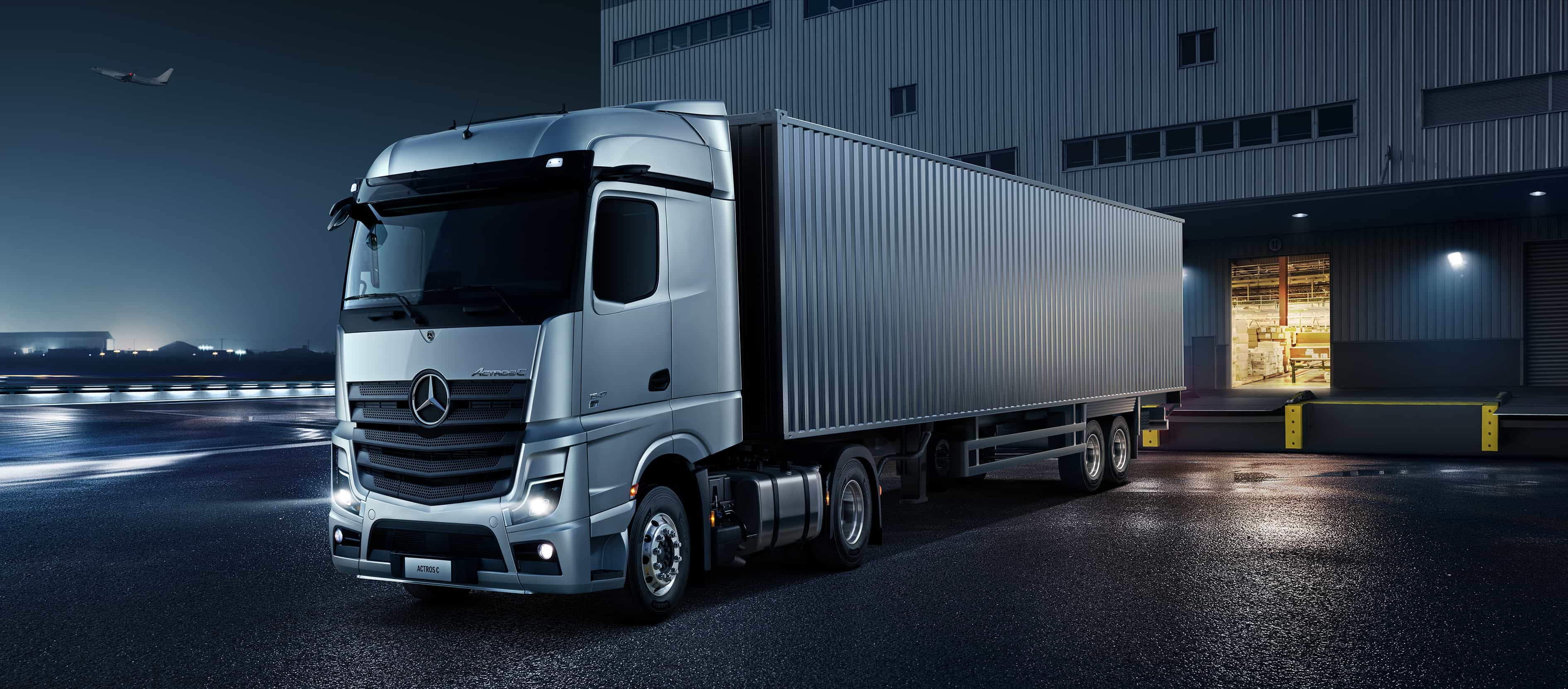
To be competitive on the sales side, to understand customer needs, to seize the great opportunities offered by the most important truck market in the world and to ride the emerging trends, some European manufacturers have decided to locate the production of their latest models in China. Scania and Mercedes-Benz have done so in the recent past. The Star, in particular, began in 2016 a plan to localise production of Actros, which materialised in 2022 with the inauguration of a production plant in the Huairou district, on the north-eastern outskirts of Beijing, with an installed capacity of 60,000 vehicles per year. The construction of the plant involved a total investment of 3.8 billion yuan, or about 480 million euro. The new product platform, built on site, includes models from the Actros and Actros C ranges. The Actros Made in China is equipped with the latest generation of the in-line-six OM 471 offered rated at 450 hp, 480 hp and 530 hp in combination with the automated Powershift 3 gearbox, while the Actros C is powered by Cummins (available units have a displacement 12 or 13 litres) in combination with the 12-speed ZF TraXon gearbox. In an exclusive interview with Dr. Holger Scherr, President and CEO, and Head of the Mercedes-Benz Business Unit at the joint-venture between Daimler Truck and Foton in China - BFDA, Beijing Foton Daimler Automotive, Allestimenti & Trasporti was able to delve into the Star's strategic plans, and long-term targets for meeting the challenges of the Chinese market.
A&T: The claim adopted by Mercedes-Benz is Made in China for China. Have you succeeded in offering the 'right' product for the domestic market?
Scherr: Mercedes-Benz Truck has a long history in China, dating back perhaps a couple of decades. The original plan was to be a successful brand as an importer of heavy vehicles. This business developed positively, but we were moving into a niche market, the segment of hi-tech, very complex vehicles. We are still in this segment, but we realised that we had no chance of entering the volume-sector. In other words, remaining in a niche segment was not enough for our brand, which aspires to a leading position globally. Only with a direct market presence we could achieve this goal and understand the needs and demands of local operators in order to offer them the 'right' product. We started by offering the Actros C 6x4 tractor version. Although the two ranges - Actros and Actros C - differ from each other, both have the DNA of Mercedes-Benz vehicles, i.e. they are reliable, quality products. These are the basic characteristics of our brand, to which we add superior drivability. The other essential element is fuel efficiency, which is crucial for the specific business case. And if a vehicle is reliable and efficient, it also retains a high residual value.
A&T: How is the truck market evolving in China?
Scherr: The changes taking place are very rapid and important. Chinese operators have realised that a large percentage of the growth in gross domestic product depends on logistics. If the latter is more efficient, the economy is more competitive. So there are big investments in this sector and in infrastructure. Then there is the underlying regulatory framework, which is also evolving. If we look at emission limits, for example, Euro VI and China VI are basically identical. But China has superior standards for on-board diagnostics, which sends real-time operating data to state control bodies. This is something that does not exist in other markets. In the past, most long-distance vehicles belonged to owner-operators, who personally drove the truck and owned it. Now the sector has become more professional with the advent of fleets. For the latter, purchasing decisions are finalised in different ways. Structured companies think about making sensible investments, which take into account more than just the purchase price of the vehicle. When we arrived here, we had to find the 'right' product placement. Our target market is not the entire truck sector in China. We target professional investors who are looking for reliability with high annual mileage. It is the market for express shipments, with fast and uncompromising delivery times, temperature-controlled transport and the handling of dangerous goods. But we are also interested in the general cargo segment. We are not, however, present in other segments, such as bulk transport of raw materials or steel. In any case, we must have an in-depth knowledge of the market, which we can only achieve with a direct presence on site. Our Actros C 6x4 has a different wheelbase than the European models. It is suitable for combinations with a total weight (GCW) of 49 tonnes and has undergone a thorough optimization process of the driveline (fine tuning). It has two tanks, one for winter diesel (a fuel that is not easy to find and 15% more expensive) and one for summer diesel, equipped with a heating system. But that is not enough. In China, drivers are used to having a window at the rear wall of the cab. All these aspects have to be taken into account. In China we have long distances - even 2,000-3,000 km along major communication axes - which require larger tanks of both diesel (even 1,000 litre) and AdBlue. The drivers - there are often two of them - live longer in the cab, as the total mileage are up to 300,000 km, in some cases even 400,000 km per year, instead of the 130-150,000 km typical in Europe. With these operating conditions, drivers must have USB sockets in the 'right' place. They are, in fact, all digitalized and the mobile phone is very important for communication, payments and much more. Finally, companies in the sector have slim profit margins. Another element, this one, to take into account.
A&T: One last question. How will the premium segment you are targeting change?
Scherr: We are in China to ensure a long-term presence. To do this, we must have everything available that is required by the market. Of course, we will not return to the record registration figures of the past. We are now facing a replacement market, with vehicles that last longer. If China moves towards trucks with alternative drivelines, we will certainly have them. Within a decade or so, diesel engines will tend to disappear. And we will have the 'right' product to replace them. In China, the regulators are more technology open than in other countries. With this in mind, they do not give us guidelines on what to do. We have to be proactive. And for the long haul missions we believe in the role of fuel cells.



发表评论
网友评论仅供其表达个人看法,并不代表商用汽车事业部立场。